
Consistent temperature control and healthy indoor air quality throughout your home rely on HVAC ductwork basics to get the job done. The blower in a typical residential air handler continuously circulates over 1,000 cubic feet per minute of conditioned air as long as the system is cycled on.
Here are some HVAC ductwork basics that show how the elements work together—and how common problems sometimes arise.
- Residential ductwork is actually two systems: supply ducts and return ducts.
- Supply ducts deliver conditioned air to individual rooms, entering through a supply vent on an upper portion of a wall, close to the ceiling.
- Return ducts remove air and convey it back to the air handler to be cooled or heated again. Some houses have return vents in every room, many others have only one central return vent often located in a central hallway.
- Supply and return air volume in the ductwork system is balanced to ensure neutral air pressure inside each room—the optimum condition for temperature control and air quality.
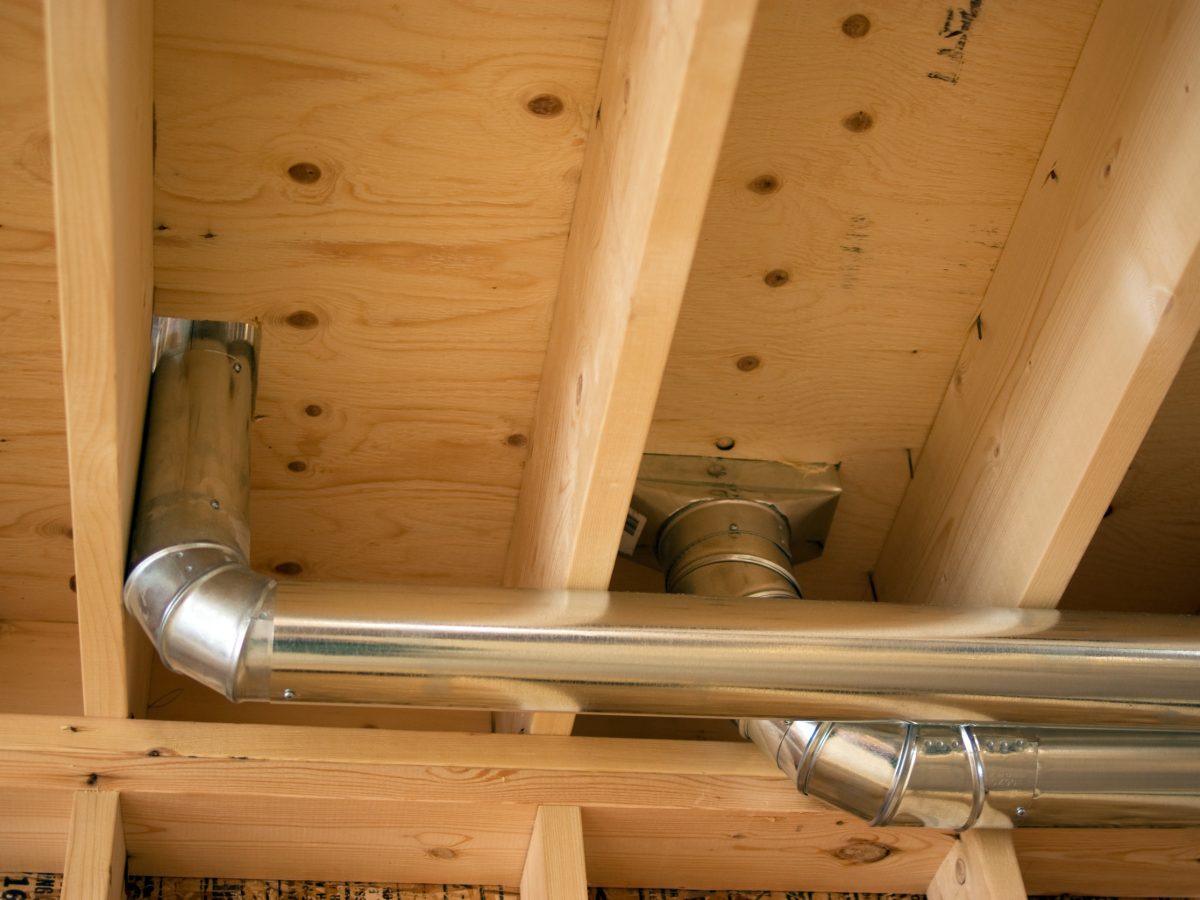
- Most ductwork is not visible in a typical home. Usually, the long spans are routed through areas such as the attic or crawl space. Shorter “branch” ducts that extend into rooms may be installed inside wall cavities.
- Rigid ducts are usually fabricated of rectangular or round sheet metal. Flexible ducts consist of a wire internal coil covered by plastic.
Potential Duct Problems
As ductwork ages, air leaks may develop at joints and other points in the system. Loss of conditioned air into unconditioned zones such as the crawl space or attic is a major contributor to increased operating costs and poor cooling and heating performance. A professional duct inspection including pressure testing can determine the extent of leakage. Proven sealing techniques will restore leaky ductwork to standards.
Thermal gain or loss frequently affects airflow temperature in ducts routed through very hot or cold zones like the attic or crawl space. Insulating exposed ductwork in these unconditioned zones resolves the issue.
Ask the experts at Air Assurance for more about HVAC ductwork basics and professional duct service to maintain indoor comfort and efficiency.