
Geothermal Systems

Tulsa & Broken Arrow Plumbers You Can Count On – 24/7
An Alternate Energy Source
Geothermal heating & cooling systems
Use the earth’s consistent temperature to your advantage
Making use of the energy stored in the Earth to heat and cool your home, or commercial building, is the most efficient and comfortable method possible.
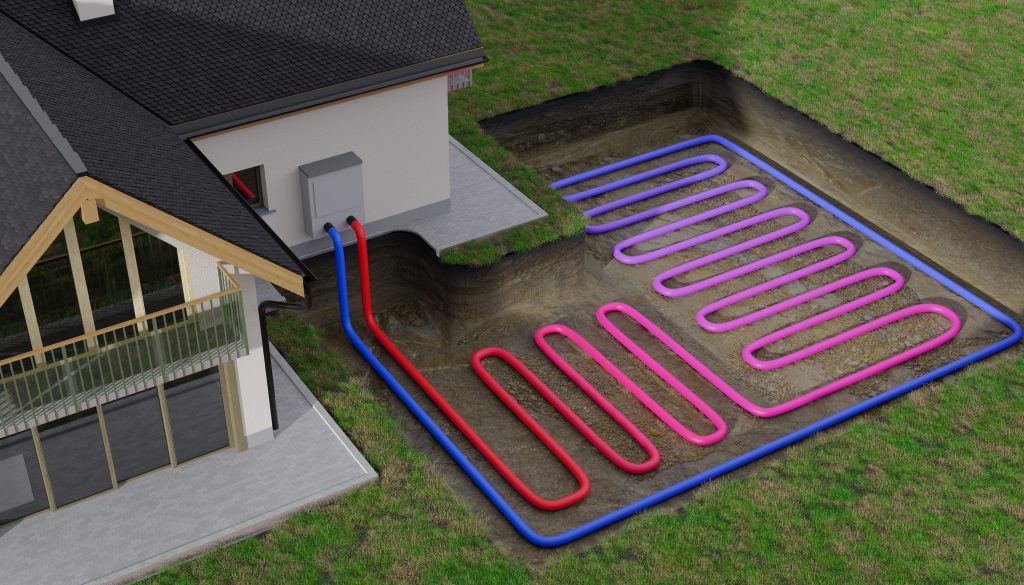
The earth absorbs almost 50% of all solar energy and remains a nearly constant temperature of 50°F to 70°F depending on geographic location. Working with an underground loop system, a ClimateMaster geothermal unit utilizes this constant temperature to exchange energy between your home and the earth as needed for heating and cooling.
In winter, water circulating inside a sealed loop absorbs heat from the earth and carries it to the unit. Here it is compressed to a higher temperature and sent as warm air to your indoor system for distribution throughout your home.
In the summer, the system reverses and expels heat from your home to the cooler earth via the loop system. This heat exchange process is not only natural, but is a truly ingenious and highly efficient way to create a comfortable climate in your home.
It’s Easy to Get Started with Air Assurance
Step 1: Make an Appointment
Schedule online and share the type of service, repair, or installation you need.
Step 2: Get an Estimate
Receive a free, no-hassle estimate. We explain all scenarios and provide solutions.
Step 3: Enjoy Home Comfort
Most work can be completed in one day, making it easy for you to relax in your home.
Getting Heat from the Ground
Geothermal Frequently Asked Questions
Curious to know even more about a geothermal system? Check out this list of the most common questions we get asked.
What is a geothermal heating and cooling system?
A geothermal HVAC system uses a ground-source heat pump and buried piping to exchange heat with the ground. During heating, the system transfers heat from the ground into the home. During cooling, it moves heat from the home back into the ground.
How does a geothermal system work?
A geothermal system circulates fluid through buried ground loops and uses a heat pump to move heat between the home and the ground. In heating mode, the system extracts usable heat from the ground. In cooling mode, it removes heat from the home and transfers it into the ground.
How much does a geothermal system cost?
Geothermal installation cost varies substantially based on home size, heating and cooling load, ground-loop design, soil and site conditions, drilling or excavation requirements, and existing HVAC infrastructure. A property-specific assessment is needed before an accurate installation estimate can be provided.
How long does it take for a geothermal HVAC system to pay back its installation cost?
Geothermal payback time depends on installation cost, available incentives, current utility rates, the efficiency of the system being replaced, household energy use, and future energy prices. Because those factors vary significantly, a fixed payback period should not be assumed without a project-specific comparison.
How long does geothermal HVAC installation take?
Geothermal installation time depends on the ground-loop design, drilling or excavation requirements, site access, equipment installation, and any modifications required inside the home. Projects can take longer than a standard HVAC replacement because the ground-loop system must also be installed.
Does a geothermal system work in all climates?
Geothermal systems can operate in both warm and cold climates because they exchange heat with the ground rather than relying entirely on outdoor air temperature. Proper design and sizing are still necessary to match the home’s heating and cooling load.
Does a geothermal heat pump need backup heating?
Whether backup heat is needed depends on the system design, equipment capacity, home heating load, climate, and controls. A properly designed geothermal system may handle the home’s heating demand on its own, while some installations include supplemental heat for peak conditions.
How much property space does a geothermal system require?
Space requirements depend on the ground-loop configuration. Horizontal loops typically require more available land, while vertical systems use deeper boreholes and a smaller surface area. Soil conditions, property layout, utilities, and site access also affect which design can be used.
How much maintenance does a geothermal system require?
Geothermal HVAC systems still require routine maintenance, including filter replacement, heat-pump inspection, airflow checks, and manufacturer-recommended service. Ground loops generally require less routine attention than indoor HVAC components, but the complete system should be inspected according to equipment requirements.
GET IN TOUCH
Schedule Your Geothermal Estimate
Interested in learning if a geothermal system would be right for your home? Our team is ready to help.
Contact us today for a free consultation.